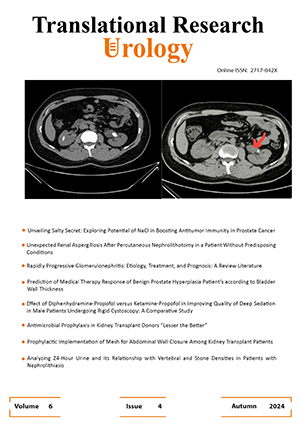
Emphysematous Pyelonephritis: Prevalence of Different Epidemiological Indicators in Two Tertiary Care Centers
نویسندگان
1 Reproductive Sciences and Sexual Health Research Center, Isfahan University of Medical Sciences, Isfahan, Iran
2 Department of Pathology, Isfahan University of Medical Sciences, Isfahan, Iran
3 School of Medicine, Isfahan University of Medical Sciences, Isfahan, Iran
4 Department of Urology, Al-Zahra Hospital, Isfahan University of Medical Sciences, Isfahan, Iran
5 Department of Urology, Al-Zahra Hospital, Isfahan University of Medical Sciences, Isfahan, Iran
6 School of Medicine, Isfahan University of Medical Sciences, Isfahan, Iran
7 Department of Gynecology, School of Medicine, Al-Zahra Hospital, Isfahan University of Medical Sciences, Isfahan, Iran
doi
10.22034/tru.2025.516263.1238چکیده
Introduction: Emphysematous pyelonephritis is an acute infectious kidney disease and can quickly cause a person's death if appropriate intervention and treatments are not performed. Considering the lack of information about the epidemiological conditions of the disease in Iran, in this study, an attempt was made to make this necessary information available by reporting the epidemiological data of the disease in a cross-sectional study.Methods: The current cross-sectional study was conducted from 2016 to 2022 on a population of emphysematous pyelonephritis referred to Al-Zahra and Khorshid University Hospital of Isfahan, Iran. By referring to the documents archive of Hospitals, using the ICD-10-CM codes N10, N11, we requested the cases of acute and chronic pyelonephritis, and the required variables were collected.Results: 128 people participated in the study. 70% of patients were female and 30% male. 77% of the patients had a history of diabetes mellitus. The percentage of patients with flank pain was 45% and 70% had fever. The Prevalence of nausea and vomiting was 55% and nausea alone was 5%. The Prevalence of Left kidney involvement was 55%, Right kidney involvement was 30% and both kidney involvement was 15%. 40% of patients had concurrent kidney stones, and 60% had a history of previous kidney stones. 10% of these patients had a history of ureteral stones. 35% of these patients also had a history of kidney surgery. 10% of patients had CKD. 15% of patients were treated with antibiotics alone, 30% underwent DJ stent insertion in addition to antibiotic therapy. 40% underwent Percutaneous drainage and antibiotic therapy and finally 15% of this population underwent nephrectomy surgery and antibiotic therapy. 10% eventually died.Conclusion: The final outcome of this project provides a general overview of emphysematous pyelonephritis patients. Therapeutic strategies such as urinary obstruction relief and combination therapies including conservative and antibiotic treatments with minimally invasive interventions, especially percutaneous drainage, can be an appropriate therapeutic approach in most patients.