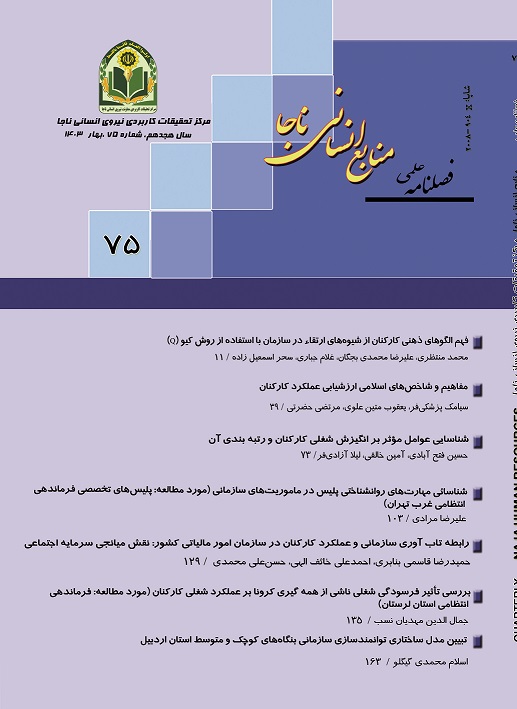
آسیب شناسی مدیریت منابع انسانی ناجا براساس مدل تعالی منابع انسانی
نویسندگان
1 دانشگاه علوم پزشکی تهران
doi
چکیده
امروز صاحبنظران معتقدند به منظور رسیدن به مزیت رقابتی، مدیریت منابع انسانی مهمترین عامل به حساب می آید، آنها معتقدند که سرمایه انسانی به دلیل کمیابی، ارزشمندی، جانشین ناپذیری و تقلیدناپذیری، بسیار با اهمیت است. این مساله در ناجا با توجه به اینکه مسئولیت ایجاد و حفظ نظم و امنیت کشور را برعهده دارد، اهمیت ویژه ای به خود گرفته است و محقق را بر این امر واداشته تا به آسیب شناسی مدیریت منابع انسانی سازمان بپردازد. این تحقیق از لحاظ هدف، کاربردی است زیرا بدنبال شناسایی و حل مساله در محیط کار می باشد و از لحاظ روش گردآوری داده ها، از نوع توصیفی- پیمایشی است، به علاوه با توجه به اینکه در این طرح پژوهشگر با استفاده از تکنیک مصاحبه عمیق و باز به بررسی و موشکافی مسایل مدیریت منابع انسانی در سازمان می پردازد. روش گردآوری داده ها میدانی و ابزار گردآوری پرسشنامه و مصاحبه می باشد. جامعه آماری این تحقیق کارکنان معاونت نیروی انسانی ناجا بوده که به دو روش تصادفی طبقه ای و غیرتصادفی-هدفمند و قضاوتی نمونه گیری شده و به منظور تجزیه و تحلیل اطلاعات از روش کمی آزمون دوجمله ای استفاده شده است. نتایج تحقیق نشان می دهد براساس مدل تعالی منابع انسانی، مدیریت منابع انسانی در ناجا در حوزه راهبردهای منابع انسانی (39 امتیاز)، فرایندهای منابع انسانی (114 امتیاز) و نتایج منابع انسانی (60 امتیاز) و در مجموع 213 امتیاز از 1000 امتیاز کسب نموده و میان وضع موجود و مطلوب آن شکاف وجود دارد.