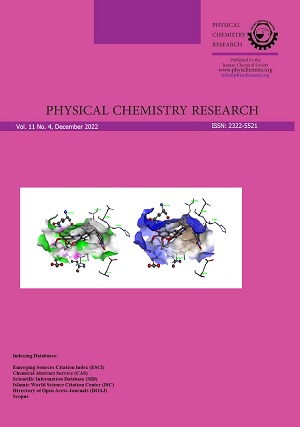
In-silico Docking Studies of Synthetic Flavonoids with Crystal Structures of Different Receptors Against Different Types of Cancer
نویسندگان
1 Department of Biotechnology, Sharda University, plot no 32, 34, Knowledge Park III, Greater Noida, Ruhallapur, Uttar Pradesh 201310
2 Department of Biotechnology, Sharda University, plot no 32, 34, Knowledge Park III, Greater Noida, Ruhallapur, Uttar Pradesh 201310
3 Department of Biotechnology, Sharda University, Plot no 32, 34, Knowledge Park III, Greater Noida, Ruhallapur, Uttar Pradesh 201310
doi
10.22036/pcr.2024.471749.2563چکیده
More than a hundred different forms of cancer exist, including skin, lung, colon, prostate, lymphomas, and breast cancers, to mention a few. The growth of malignant tumors is largely influenced by two factors: genetic damage within cells and cancer gene inactivation. The type and stage of the cancer determine the necessary treatments. Radiation therapy, chemotherapy, and/or surgeries are frequently included in treatment programs. These therapies do, however, have drawbacks and can be extremely painful while receiving them. Thus, this study looked into how various synthetic flavonoids affected five different types of cancer: gastrointestinal, brain, liver, lung, and breast cancer. Using a molecular docking model, this research explores the binding interactions between flavonoids and receptors and offers some insights into potential cancer treatments. ADME test for the selected compounds showed 0 violations according to the Lipinski rule of five. 3-(4’-Nitrobenzoyl)-7-(1H-1,2,4-triazol-1-yl)-2-(4’-nitrophenyl)-4H-chromen-4-one showed the most prominent results as it exhibited the best binding affinity with all the selected receptors. This synthetic flavonoid exhibited a binding affinity of -12.45kcal/mol in the case of the selected receptor for breast cancer i.e., the structure of BRCA2-DSS1 Complex (PDB ID: 1IYJ). The results suggested anticancer potential of selected synthetic flavonoids.