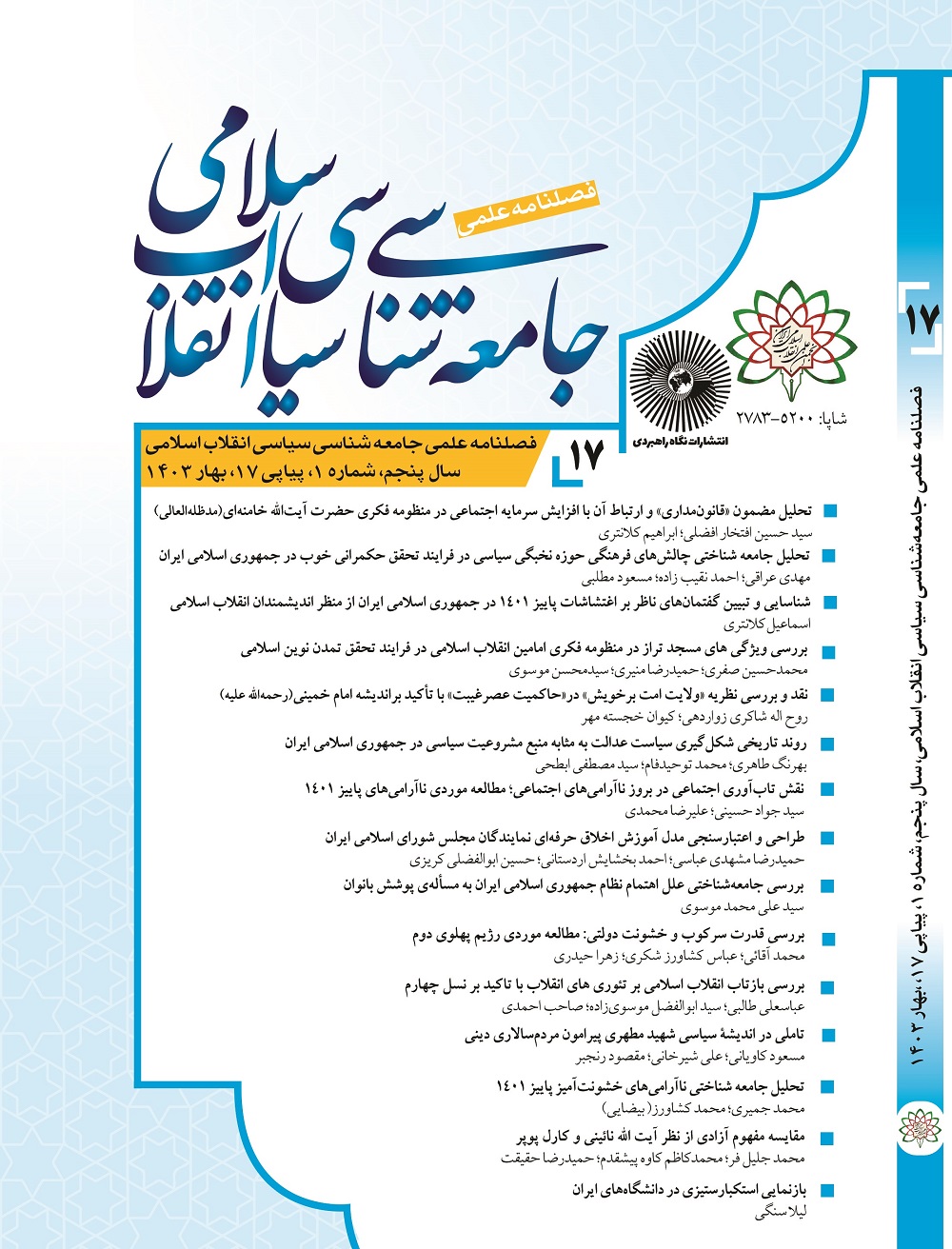
بررسی جامعه شناسی قدرت انقلاب اسلامی ایران با انتخاب تبریز به عنوان پایتخت گردشگری جهان اسلام در سال ۲۰۱۸
نویسندگان
doi
چکیده
شهر تبریز یکی از شهرهای بزرگ ایران و مرکز استان آذربایجان شرقی است. این شهر، بزرگ ترین شهر منطقه شمال غرب ایران و مناطق آذری نشین بوده و مرکز اداری، ارتباطی، بازرگانی، سیاسی، صنعتی، فرهنگی و نظامی این منطقه شناخته می شود. جمعیت تبریز در سال 1390 خورشیدی بالغ بر 1٬494٬998 نفر بوده که این رقم با احتساب جمعیت ساکن در حومه شهر به حدود 1٬8 میلیون نفر می رسد. توریسم یکی از نیازهای اساسی جوامع انسانی در عصر حاضر و یکی از محرکه های اصلی اقتصاد جهانی محسوب می شود. انعطاف پذیری و چشم انداز روشن و رشد سریع این صنعت توجهی جدی و برخورداری علمی برای بهره گیری از پتانسیل های آن را می طلبد. آذربایجان شرقی به جهت موقعیت جغرافیایی برتر و قرار گرفتن در مسیر جاده ابریشم عامل پیوند دنیای غرب به شرق بوده است و از نظر موقعیت جغرافیایی و قرار داشتن در منطقه مرزی کشور، از مزیت های مکانی وارتباطی ویژه ای نیز بهره مند است؛ آن چنان که مرکز آن شهر تبریز را دروازه مشرق زمین خوانده اند. در ایران، تبریز به شهر اوّلین ها مشهور است؛ زیرا اولین مدرسه، اوّلین شهرداری، اوّلین چاپخانه، اوّلین شورای شهر و بسیاری از اولین ها در تبریز برپا شده است. قدمت زیاد تاریخ و تمدن در استان ما باعث شده است که آثار بدیعی از همه دوره های تاریخی در آن دیده شود. تبریز به همراه بسیاری از شهرهای استان مانند مراغه، مرند، شبستر، میانه، و… آثار تاریخی، فرهنگی و مذهبی بی بدیلی در قلمرو ملی و جهان فراهم آورده است تا آن جا که بیش از ۱۴۰۰ اثر تاریخی استان در فهرست آثار ملی به ثبت رسیده است و از این نظر رتبه دوم را در کشور داراست.